
MICROSOFT • PRODUCT DESIGN INTERNSHIP
Designing user collaboration into agent workflows.
This summer I returned to Microsoft for a second internship, rejoining the same team to work on a new initiative: an AI app-building experience within Copilot Studio.
The effort began alongside my internship, so I worked with the team from early vision through its first MVP release.
Scope
Designed an interactive system of components for Copilot Studio's agentic chat, allowing users to understand, act on, and stay in control of AI workflows directly in the conversation.
Challenge
How might we make building with agents feel more collaborative?
Impact
Introduced a scalable interaction pattern bringing transparency to agent tool calls, shipped in the initiative’s MVP launch.
Validated a broader system of agent chat patterns through usability testing with 24 participants
• CONTEXT
Agent-led development
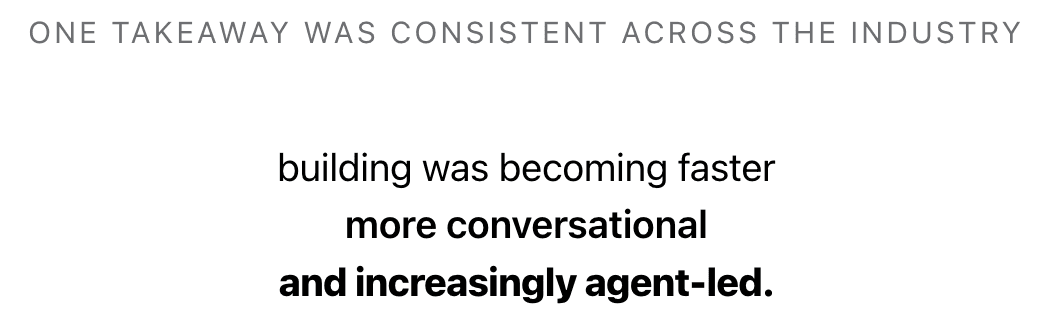
In my first week, I conducted a competitive audit of 9 agentic app builders, annotating 300+ screens to identify recurring patterns and pain points. I consolidated the findings into a report shared across Design and PM, which was used to help shape early initiative direction.
I initially explored making these surfaces more prominent across the product.
30+ directions prototyped in 2 weeks, for early input across Design, PM, and Research.
But these directions still asked builders to know what to look for, and leave their workflow to find it.
I eventually realized the problem here wasn’t visibility alone.
It was knowing what mattered, when.
— THE SOLUTION —
1 GUIDANCE
Next Best Actions
I designed lightweight actions that helped makers continue the current workflow, surfacing relevant next steps directly in chat.
Shown: Suggested next steps surfaced after the agent completes a task.
Agentic Proposals
For moments when a broader capability became relevant, I introduced a proposal pattern that let the agent surface it in context, turning chat into a moment for discovery and education.
Shown: A proposal to save repeated work as a reusable skill.
2 VISIBILITY
Review AI Work
As agents gained the ability to act across the product, users needed a clear way to understand what had changed without leaving their workflow. I designed an inline review pattern for AI-generated artifacts, where users can open them directly in chat, refine what was created, and continue working without breaking flow.
— RESEARCH —
Validated with Users
I partnered with Research to run 24 unmoderated think-aloud sessions testing six proposal and review prototypes. Users understood what the agent was offering and what it created, but the biggest opportunities were in how those moments were presented and communicated.
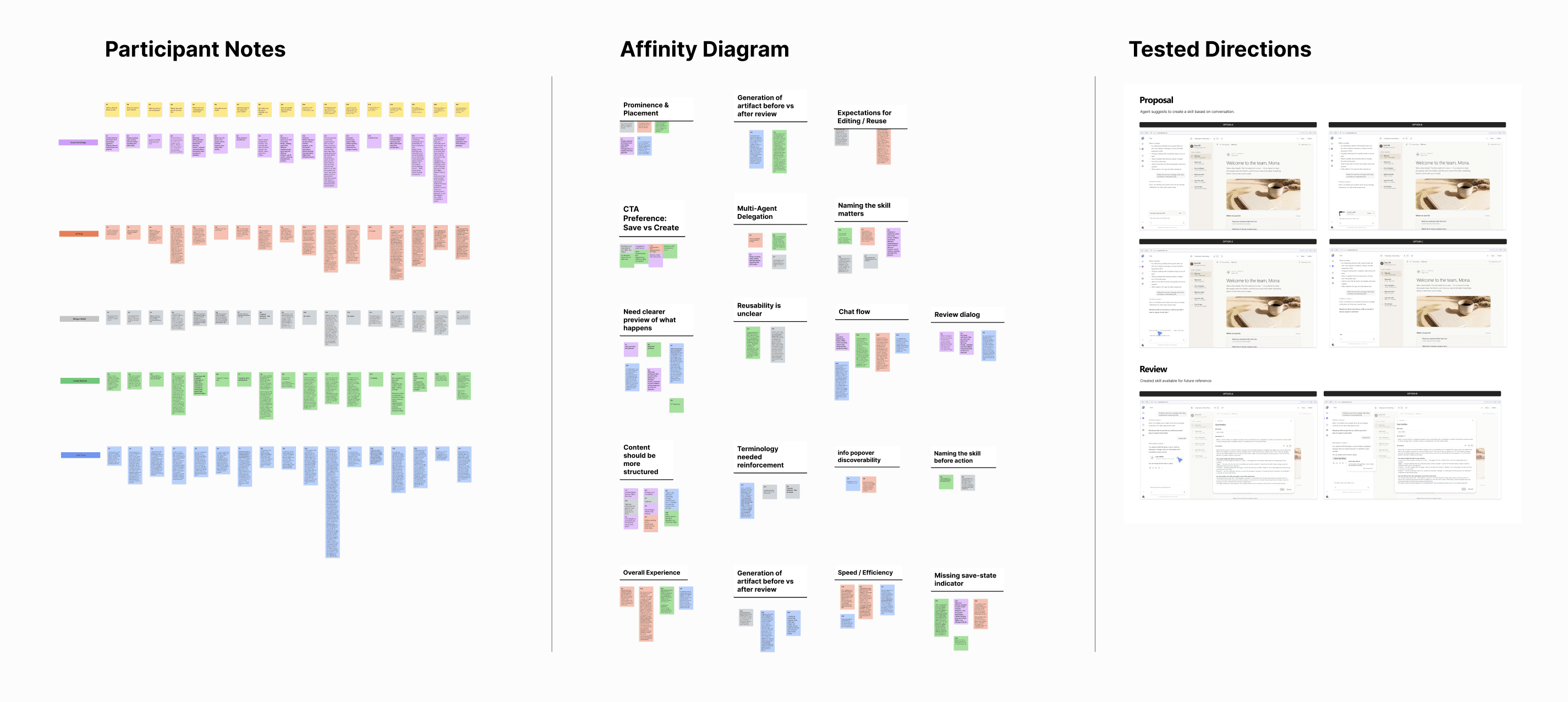
Findings validated the core concept and guided the final UI direction
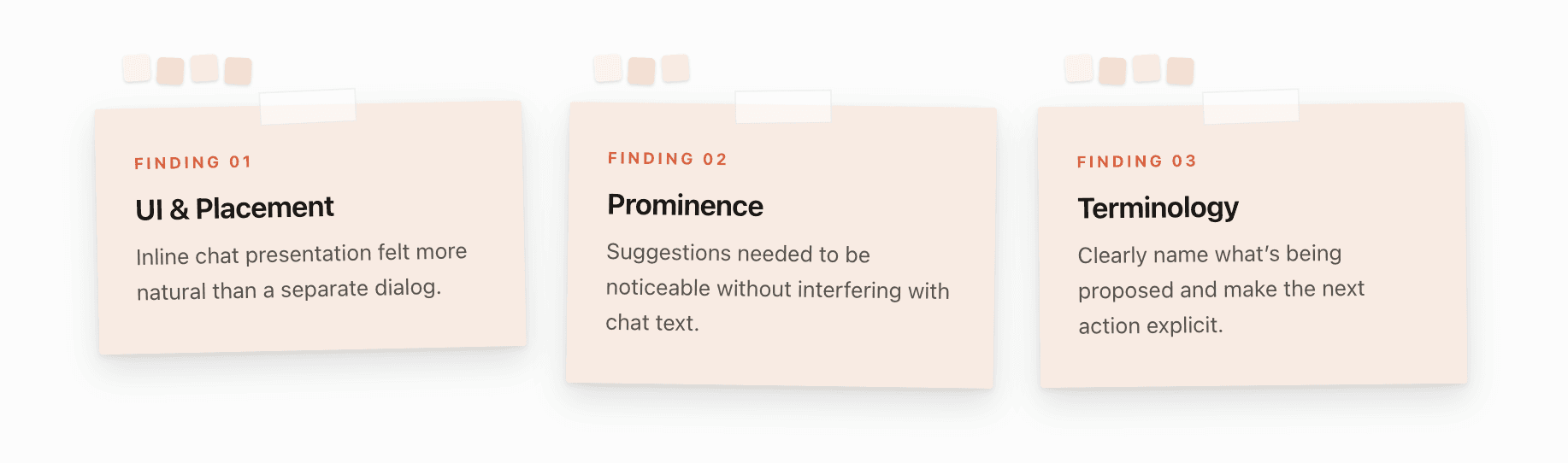
I translated the final direction into implementation guidance for proposal and review patterns, and scaled study findings to later chat components I would design.
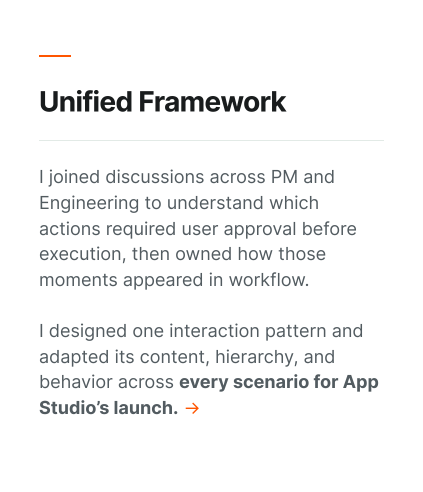
I took ownership of turning the ask into a scalable interaction pattern.
— DELIVERY —
Built to Scale
I documented shared rules for content, hierarchy, and card behavior so the framework could be implemented consistently and extended as new tool calls were introduced.
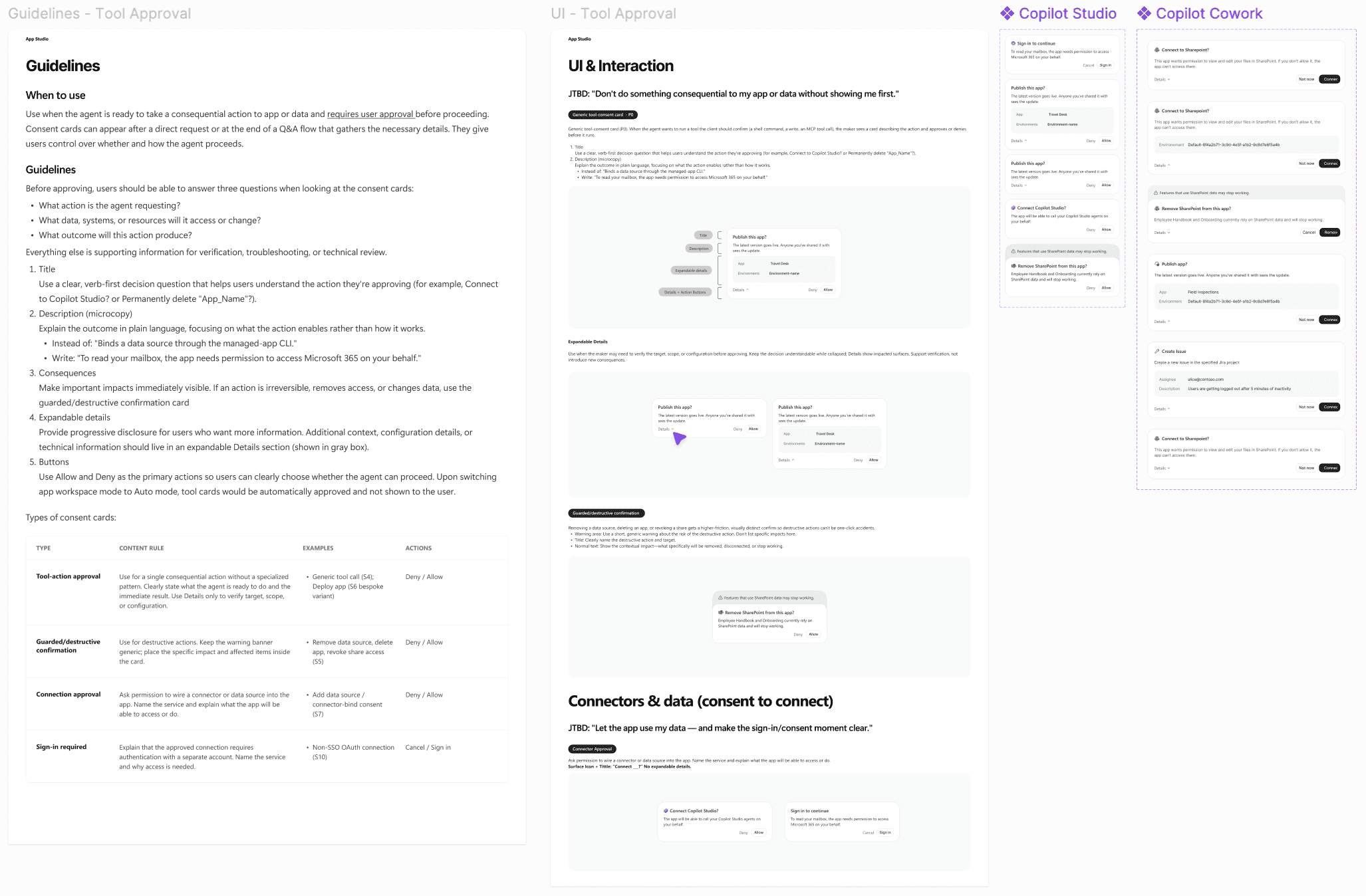
Implementation Guidance · Including variants for integration in Copilot Cowork.
— IMPACT —
Shipped in the product release
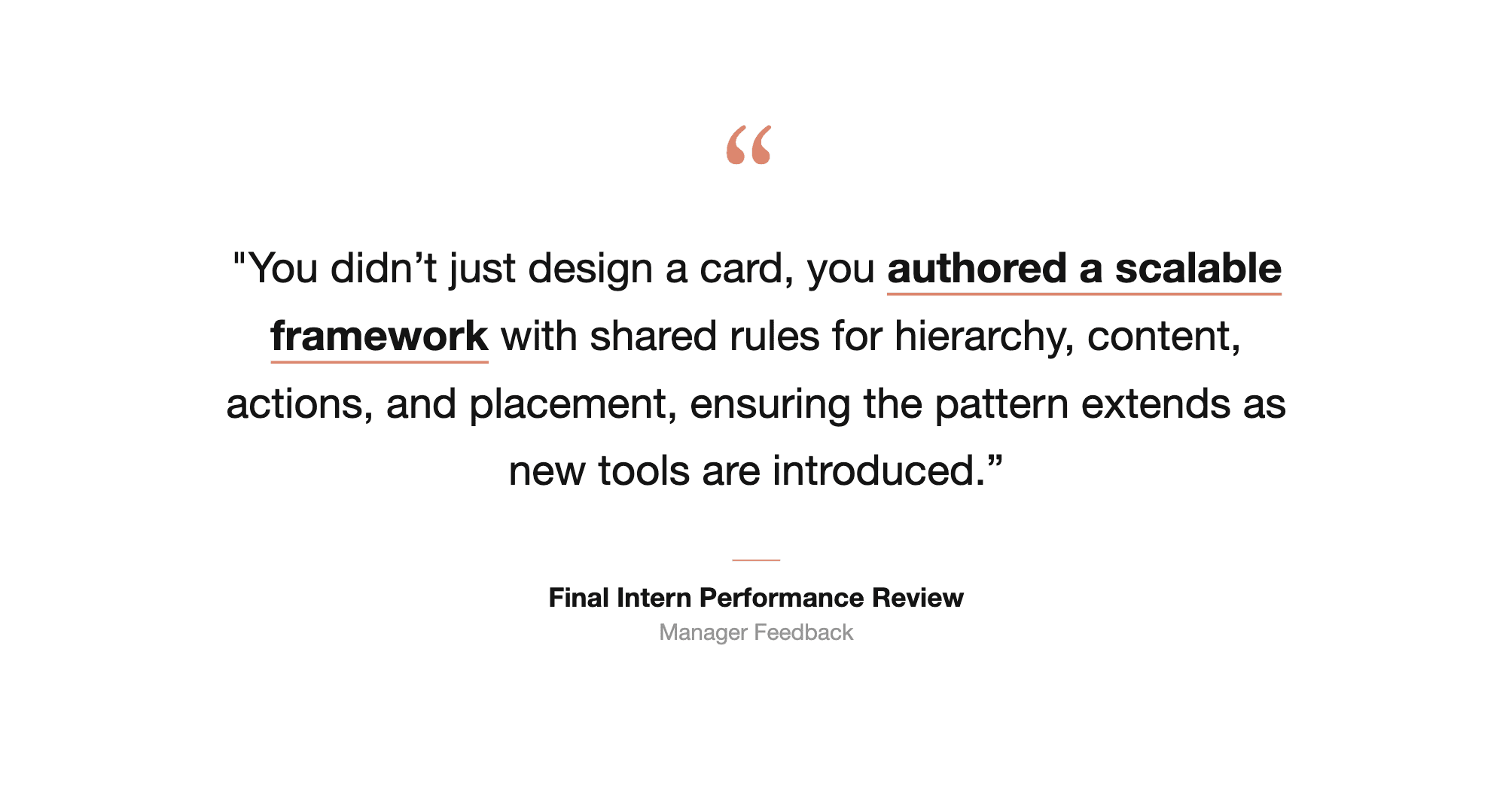
I proposed the approval framework to PM and Engineering, gained alignment, and handed off implementation guidance. The framework shipped across every scenario supported in MVP launch, giving users visibility and control before consequential agent actions were executed.
Shown: Agentic approval patterns across sharing and data management
• SYSTEM
That’s a lot of patterns.
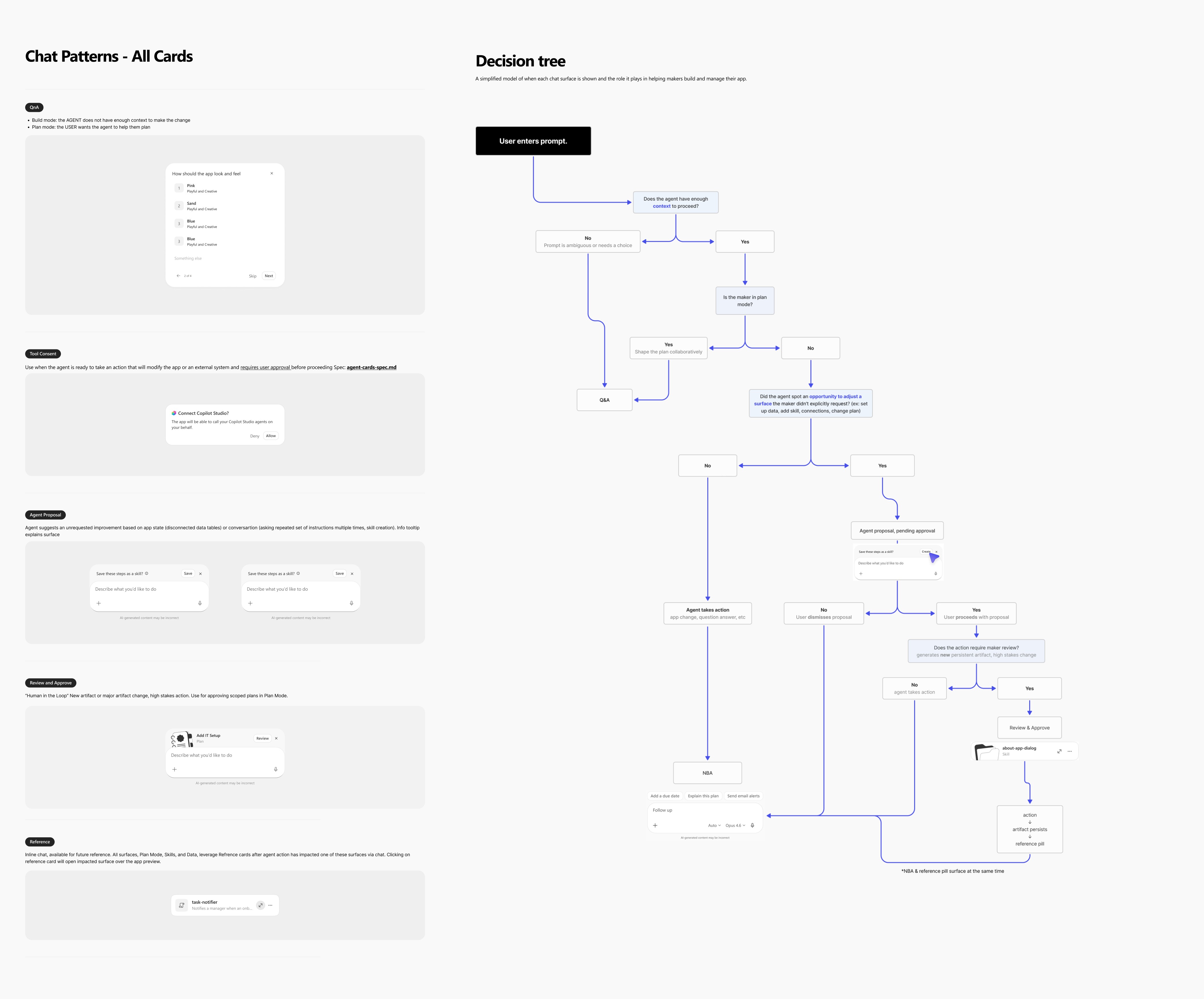
By this point, I had designed a range of patterns that made agentic chat more actionable, from next-best actions and agentic proposals to review of AI artifacts and agent tool call approval.
REFLECTIONS —
Same team. Different job.
Interning on the same team a year apart gave me a unique snapshot of how significantly this industry has changed with AI. The summer before, I worked mostly in Figma… this summer, I was building coded prototypes, working in shared repositories, and merging work alongside other designers.
Output vs Impact
I was excited to experiment with AI tools this summer, but my biggest lesson was learning to balance speed with intention. AI helped me explore more directions, faster — I built over 40 prototypes across my internship — but I also learned the value of knowing when to narrow toward a direction I could defend. Output is easy now. Impact means knowing what to build.
Systems Thinking
I learned that a strong solution shouldn't only work once. This summer I pushed myself to look beyond individual patterns and think in systems. That meant defining behaviors and guidance beyond the UI, so my contribution could scale after my internship ended.
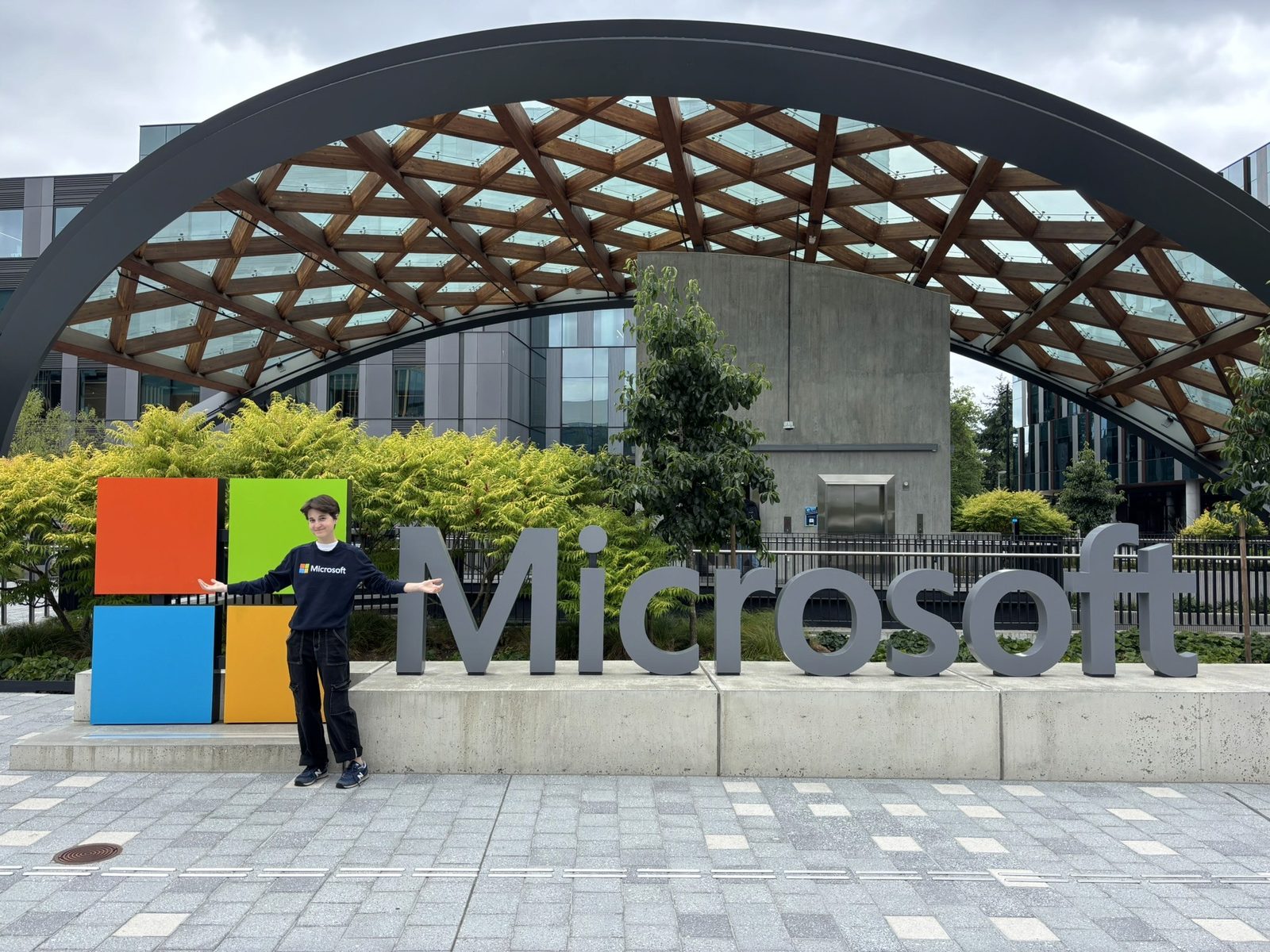
Beyond grateful to have learned this summer from some of the most talented, hardworking people I've ever met. This is an experience that will guide the rest of my career and growth in this field.
Thank you to this wonderful team for making it such a joy <3